 Skip to content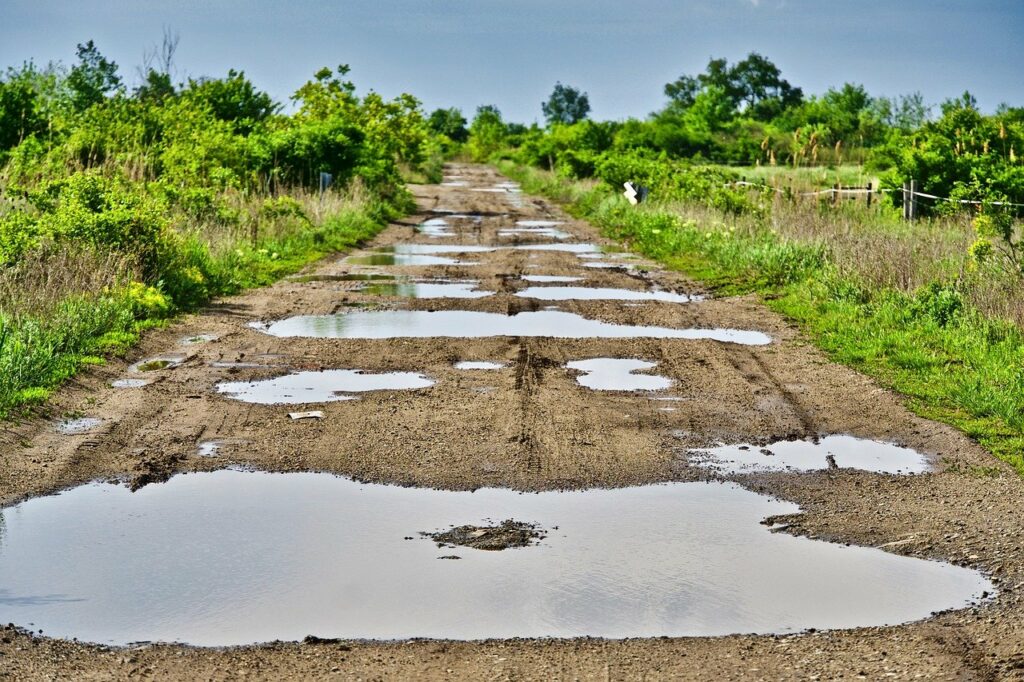
14 April 2022 – THE current heavy rains caused further destruction of the already poorly maintained rural roads in South Africa, according to agricultural organisation the Agricultural Business Chamber (Agbiz).
Wandile Sihlobo, the organisation’s chief economist, said yesterday that these road networks were at the heart of the farming value chain, especially for transporting the produce from farms to storage areas and various markets for consumption and exports.
Several farmer associations have highlighted this challenge and called for local and national government intervention to improve the roads.
Sihlobo said for the Free State, which was a key region for South Africa’s grains and oilseeds production, the deteriorating roads infrastructure challenge was also raised over the past weekend at the Presidential Imbizo in Mangaung Metropolitan Municipality, which President Cyril Ramaphosa led.
“While the media coverage was mainly in this particular province in the past few days, this is a challenge across all provinces of South Africa. Other provinces that have thus far not been as vocal will likely also speak up in the coming months as South Africa approaches a busy period of harvesting summer grains, oilseeds and major horticulture such as citrus and other vegetables,” Sihlobo said.
Agbiz said the deteriorating road infrastructure increased the transaction costs for established farmers and agribusinesses, which shifted some of their resources towards maintaining stretches of roads – a public sector duty – instead of investing time and capital in their businesses.
Emerging commercial farmers in particular were hard hit because they lacked such resources. With the decline in rail usage over time in the agricultural sector, roads had become the main mode of transporting staple foods across the country and the ports.
“As a result, South Africa cannot speak about increasing agricultural production through various partnership programmes if the infrastructure challenges are not at the centre of any growth plan. This is also not the main task of the Department of Agriculture, Land Reform and Rural Development (Dalrrd), which is the main interface of farmers, agribusinesses and government, but mainly falls under the Department of Public Works and Infrastructure as well as provincial and municipal government.
“However, the Dalrrd, can elevate this challenge within the government structures as it will hinder the very same plans the department has for boosting growth and employment in agriculture and the rural economy,” he said.
Sihlobo said the 2021/22 summer crop harvest period, which begins this month, would likely not escape the transport glitches, as the continuous rains would likely exacerbate the challenge.
Going into the 2022/23 production season, this should be the major focus that could have positive spin-offs in terms of temporary employment in various rural towns that required road upgrades and maintenance. According to him, sequencing this infrastructure need, along with the implementation of the Agriculture, Agro-processing Master Plan, could improve the sentiment in the sector.
“Moreover, this would allow the agribusinesses and farming enterprises to shift resources they are spending on roads into production and partnerships with new entrants in the sector, and ultimately drive inclusive growth. If interventions are not done to improve road infrastructure, the other government interventions and intentions to boost the sector risk being viewed half-heartedly in the sector.”
Agbiz said while it made this point from an agricultural perspective, the improvement in road networks would have positive spin-offs for various sectors of the economy and industries. It said the domestic tourism industry also suffered from poorly maintained roads as did the mining industry, automobile production and other areas of manufacturing.
These were also critical sectors of the economy, with mining, tourism, and agriculture, in particular, being at the core of the rural economy, which relied heavily on the primary industries of the economy.
“Another important aspect is that the better-maintained roads lower transaction costs of transporting food products from production to consumption. Over time, that has beneficial effects on the prices of some products at the retail level,” Agbiz said.
South Africa’s rural roads have been poorly maintained for some time, especially over the past decade and the farming community and, to an extent, the tourism industry had long felt the impact. The recent rains of the 2021/22 summer season worsened the conditions.
“The government infrastructure programme, national and local, should prioritise roads. Provinces such as the Free State, North West, Eastern Cape, Northern Cape, and Limpopo could benefit immensely from improved road networks and better municipal service delivery,” Sihlobo said. Source (Business Report)