 Skip to content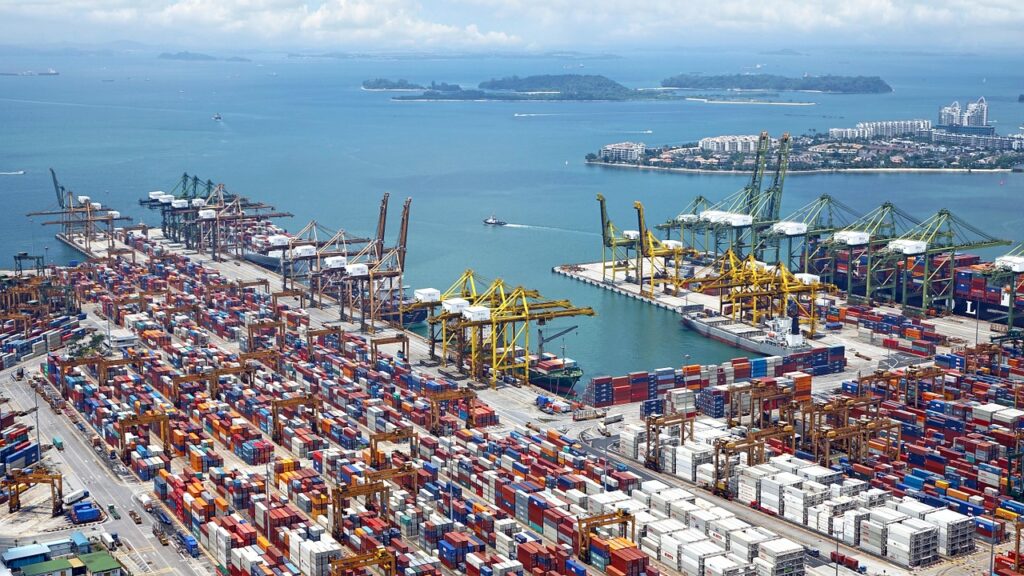
7 April 2022 – The agricultural sector is an important sector of the South African economy. The important contribution of this sector to the economy of South Africa has also been highlighted by the Covid-19 pandemic, when the sector showed positive growth. The only other sector that also grew was government services (Stats SA 2021)1. The agricultural sector grew by 13% in 2020, resulting in a trade surplus of more than US$4 billion (BFAP 2021)2. This growth is expected to continue, with an export growth of 40% by 2030 (Ibid).
However, this expected growth in the agricultural sector, particularly growth in exports can be dampened by challenges faced at South African ports. In recent months, challenges with Transnet Port Terminals (TPT) have been evident, with reports of inefficiency at various ports (Johnson 20213; Venter 20214). The Durban port in particular, has been reported to be congested, resulting in delays of imports and exports (Venter 20215; Goddard 20206). This port is the largest of all the port facilities in South Africa and has the highest vessel traffic on the African continent (Sinha 2021)7.
A consequence of the congestion and delays at the port has been the blockage of the N3 highway (Rall 2021)8, further negatively affecting businesses, including logistics companies. According to TPT, challenges at the ports are due to equipment-related problems, especially their availability and reliability (Venter 2021). At the port of Cape Town, port infrastructure is said to be breaking down or in a state of disrepair (EUROFRUIT 20229; Parliamentary Monitoring Group 202110).
The Container Port Performance Index (CPPI) (2020) of the World Bank ranked South African ports of Cape Town, Port Elizabeth, Durban and Ngqura among the five worst performing ports in the world using statistical and administrative approaches.
These South African ports were positioned from 347 to 351 out of 351 ports that were included in the report (World Bank 2021)11. This is concerning given that port performance is key in determining a country’s trade costs, and doubling efficiency has a similar impact on trade costs as would halving the physical distance between ports (Wilmsmeier et al. 200612; World Bank 2021). The inefficiencies at the ports have had devastating effects on agricultural exports. The Citrus Growers Association (CGS) in August 2021 advised its members to stop packing fruit destined for the Durban port (Jansen 2021)13. However, some citrus producers, particularly soft citrus were at the risk of losing their fruit if they halted packing (Ibid). Similarly, table grape growers lost revenues over the festive period due to their products arriving late in Europe (EUROFRUIT 2022).
There were reports of delays of over 14 days in and outside of the port (Ibid). The current situation points to the likelihood of the port not being able to handle the export of other agricultural crops such as stone fruits, apples, pears, avocadoes and citrus in the coming months (Ibid). The Integrated National Export Strategy (INES) or “Export 2030” seeks to enhance export performance by 2030 through capturing 1% of total world exports in value to increase export-oriented employment (DTI 2016)14. Efficient port facilities is one of the key factors that will be necessary to achieve this goal.
Given the important role played by ports in the trade of goods, not only agricultural goods but also goods produced in other industries, the challenges at South African ports require urgent attention. The South African government views the country’s ports and terminals as key for economic growth and has recently announced a multimillion-rand investment towards restoring and upgrading port facilities at the ports of Ngqura, Durban and Richards Bay (Dludla 2022)15. I t will be crucial that government and TPT act urgently to fast-track the process of restoring and upgrading port facilities. Constant development of port infrastructure contributes to improved logistics performance and this leads to higher maritime trade, resulting in higher economic growth, especially in developing countries (Munim and Schramm 2018)16 such as South Africa. Source (Harvest SA)